
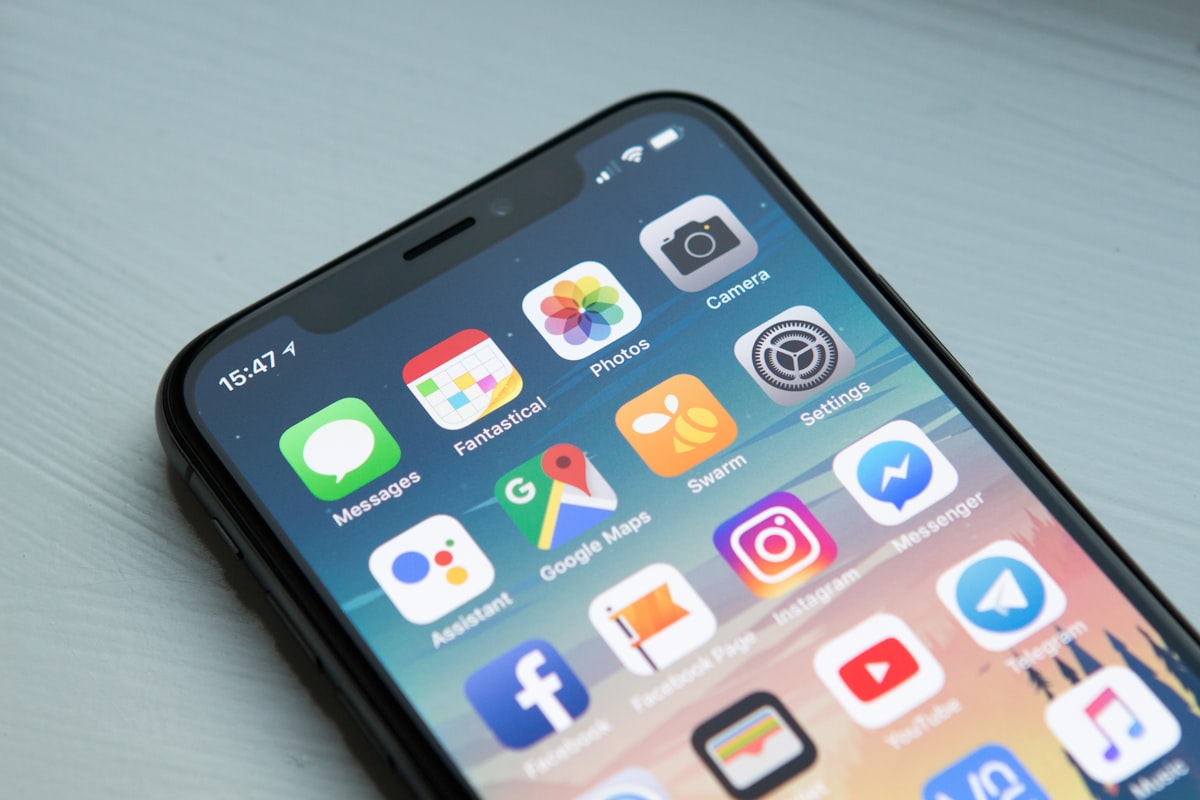
Your phone wakes you up. Your phone is the first thing you look at. Before you are fully conscious, you are already inside someone else’s algorithm.
This is not an accident. It is the product of deliberate engineering, applied at the most vulnerable moment of your day.
What the Attention Economy Actually Is
The term attention economy was formalized by economist and cognitive scientist Herbert Simon in 1971, who observed: “A wealth of information creates a poverty of attention.” The implication — that attention is the scarce resource in an information-rich environment, and that economic logic applies to its allocation — became foundational to how modern digital platforms were built.
Tim Wu, author of The Attention Merchants, documents the history:
“The business model of the attention economy is simple and consistent: find a way to attract human attention, hold it as long as possible, and sell it to advertisers. Every innovation in media for the past 150 years — from the penny press to cable television to social platforms — follows this model.”
What changed with smartphones is access. The attention economy now has a device in your hand from the moment you wake to the moment you sleep. More specifically: it has a device that doubles as your alarm, which means you reach for it at the precise second of maximum neurological vulnerability — during sleep inertia, before the prefrontal cortex is fully online, with executive control at its weakest point of the day.
Variable Reward Schedules: The Engineering Behind the Pull
The reason social media and news feeds feel compulsive in the morning comes down to a basic principle of behavioral conditioning: variable ratio reinforcement schedules produce the highest and most persistent rates of behavior.
This finding originates from B.F. Skinner’s mid-20th century research on operant conditioning. A variable ratio schedule — where a reward is delivered after an unpredictable number of responses — generates behavior that is highly resistant to extinction, with high response rates, continuing even when rewards are sparse.
Slot machines use variable ratio schedules. So does social media. Pull down to refresh. Sometimes there is something rewarding. Often there is not. The unpredictability is not a bug — it is the feature that keeps you pulling.
Tristan Harris, former design ethicist at Google and co-founder of the Center for Humane Technology:
“These are not neutral tools. A handful of people working at a handful of companies are steering the thoughts of two billion people through the design of these platforms. It’s not that these companies are evil. It’s that they’ve built an attention-capturing machine optimized for engagement — and engagement turns out to be a proxy for outrage, anxiety, and compulsion.”
Nir Eyal, whose book Hooked is a manual for building habit-forming products, describes the mechanism he helped develop:
“The hook model works through four phases: trigger, action, variable reward, investment. The goal is to move the user from external triggers to internal triggers — until they reach for the product not because of a notification but because of an internal itch.”
That internal itch is what you feel when you wake up and your hand moves toward the phone before you are fully conscious of reaching for it.
What Happens Neurologically in the First Check
The morning phone check activates specific neurological systems in a specific order.
Dopamine anticipation spike. The act of reaching for the phone — before seeing what is on it — triggers dopaminergic activity associated with reward anticipation. This is the pull: the neurochemical signal that says there might be something rewarding here.
Cortisol re-routing. If the content includes anything anxiety-producing — a difficult email, negative news, social comparison — the cortisol awakening response, which was primed to produce alertness and focused energy, gets re-routed through the amygdala into stress mode instead. The alertness cortisol becomes the anxiety cortisol.
Attention mode locking. The prefrontal cortex, just coming online after sleep inertia, receives its first sustained input: fragmented, scrolling, reactive content. Research on attentional entrainment suggests this mode — reactive, stimulus-driven, shallow — tends to persist for a significant portion of the morning.
Adam Alter, author of Irresistible: The Rise of Addictive Technology and the Business of Keeping Us Hooked, describes the compound effect:
“When we check our phones first thing in the morning, we are handing the first moments of our conscious day to the attention merchants. Those moments set the emotional and attentional tone for everything that follows.”
Psychological fact: A study by IDC (International Data Corporation) found that 80% of smartphone users check their phones within 15 minutes of waking. The majority reported it as a reflexive action rather than an intentional choice. The behavior has become a conditioned reflex to the alarm-plus-phone cue.
The Morning as the Highest-Value Capture Window
The morning is not just the moment of maximum neurological vulnerability for the user. It is the highest-value capture window for attention platforms.
Morning engagement sets the day’s emotional and attentional pattern. This is known in growth product circles. It is why notification design is specifically aggressive in the first hour after waking. It is why app icons are placed on the most accessible home-screen positions. It is why the alarm function is built into the same device.
The alarm exists, in part, as a Trojan horse.
Structural Countermeasures
Understanding the mechanism suggests which interventions actually work.
Use a dedicated alarm device. A physical alarm clock — not your phone — removes the smartphone from the bedside and eliminates the automatic reach. The phone is no longer the alarm, so the alarm-firing cue no longer triggers phone engagement. This is not nostalgic; it is structural.
Create a no-phone zone for the first 20–30 minutes. The phone stays in another room, or plugged in across the bedroom, until a specific point in the morning routine has been reached. The friction of retrieving it is enough to break the reflexive engagement.
Replace the first action. The current first morning action is: hear alarm → pick up phone → dismiss → stay on phone. Replacing the first action with anything else — getting up to turn off a physical alarm, drawing a dismissal prompt, immediately drinking water — interrupts the cue-routine-reward chain before it executes.
This is the behavioral architecture DrawBell builds in. The alarm fires. To dismiss it, you draw a shape on screen. By the time you have drawn a bicycle or a house and the on-device AI has verified it, you have completed a deliberate task, your motor cortex is engaged, and you have not once opened a notification feed. The dismissal itself is the counter-conditioning: the reward is the alarm stopping, not social validation or new information.
Johann Hari, in Stolen Focus: Why You Can’t Pay Attention and How to Think Deeply Again, summarizes the countermeasure logic:
“Protecting your attention in the morning is not about self-denial. It is about recognizing what your attention is worth, and refusing to give it away for free to systems designed to monetize it.”
The Bottom Line
The attention economy is operating exactly as designed in your morning. The phone-as-alarm is an engineered entry point into a behavioral loop that transfers your morning cognitive window to an advertiser-funded engagement machine.
This is not a conspiracy theory. It is the published business model of the platforms you use, described by the people who built them.
The countermeasures are structural, not motivational. A separate alarm. A no-phone interval. An active dismissal ritual. These do not require willpower because they do not pit you against your trained reflexes — they change the physical environment so the reflex never fires.
Your attention is the most valuable thing you have in the morning. Spend it on what you actually chose to spend it on.